
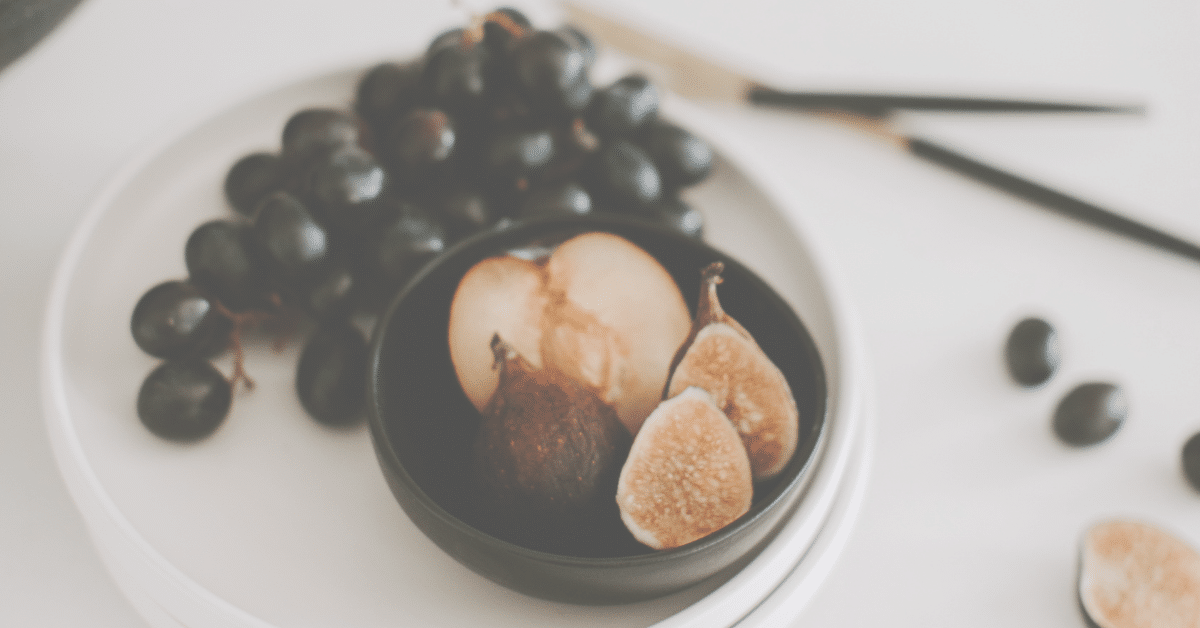

How Tannin-Rich Favorites Might Be A Cause for Your Muscle cramps, Sleep disruption, and/or Joint Pain.
Find yourself waking up with leg cramps, experiencing restless legs in the evening, more finger, knee, or general joint pain than usual, and/or struggling with your sleep lately, despite a good nighttime routine? Your body may be experiencing the effects of excess tannins.
Excess tannins can be a moving target, making it more challenging to identify them as the cause of your symptoms. I know this subtle, sneaky scenario because I am reminded of it every so often when excess tannins enter my diet.
Tannins come in many forms and are health-giving, that is, until they are consumed in excess, which can be easy to do if you regularly drink coffee, tea, chocolate, and wine. While these can all be part of a healthy lifestyle, there are times when we layer on seasonal foods, also high in tannins, that we begin to slowly overconsume in a way that adds up to a quiet depletion of mineral stores, and that depletion of minerals may interfere with sleep, muscle recovery, and increased joint pain.
Higher-tannin beverages and foods become more prevalent during the Summer months for me, as I increase my intake of foods like cherries and fresh berries, and also increase my drinking of tannin-rich drinks throughout the day. All of a sudden, I will notice a bit of tingling or restless legs, which turns into disrupted sleep.
I’ll catch myself saying that my sleep is off for some reason, then light dawns on Marblehead (hopefully before it escalates to me saying in the middle of the night: Uh Oh– leg cramp coming on!
And because nighttime leg cramps are so painful, I really work hard to avoid them! Anyway, it’s then that I will realize it is time to slow down on consuming high-tannin foods, and be sure to swap out tannin-rich drinks for mineral water!

What Are Tannins and Where Are They Found?
Tannins are natural compounds found in many plant-based foods and drinks. They give black tea, red wine, dark chocolate, and some fruits their dry, bitter taste. They are antioxidant-rich and good for you, but in excess, tannins may bind to minerals in your food or supplements, reducing absorption.
For me, as well as many of my past clients, it has been helpful to recognize that leg cramps (including restless legs), sleep disruption, and even a surprise bout of joint pain can be resolved once we notice that excess tannins have crept in.
Stone fruits, fresh figs, iced tea, or iced coffee throughout the day during the Summer. All these wonderful, nutritious, and delicious foods may need to be spread out to avoid tannin overload.
Every day, Tannin-Rich Items:
- Black or green tea
- Coffee
- Red wine
- Dark chocolate or cocoa powder
- Berries, grapes, pomegranates
- Walnuts, pecans
Seasonal Foods
High-tannin foods can rotate in seasonally, and because there is no immediate symptom, it’s tough to figure out that the excess may be a factor in your symptom(s). And then as the season passes and the foods switch again, it seems to have just ‘gotten better’. This makes it tricky. But the simple awareness can be the key for some. (Like me!)
If you have been struggling with joint pain, sleep disturbance, or muscle cramps lately, consider whether you have increased your tannin intake in the past weeks or months. Simply reduce them and see if things resolve. Give it a few weeks. It typically takes 2 weeks for me, and I am sure to increase my mineral water and take extra multi-mineral complex.
A Couple of Seasonal Foods, and then a more complete list below for you
If you are not sure what foods have tannins, a simple search of: high-tannin foods and drinks will provide you with a reference list, especially in your own region. Here are a few to get you started, and below is a longer list for you that you can pin for quick reference.
Summer: High-Tannin Foods
Grapes (especially red/black, and unripe)
- Tannin concentration: Skins and seeds
- Note: Tannins decrease as grapes ripen
Berries (blueberries, blackberries, raspberries, cranberries)
- Tannin concentration: Skins and seeds
- Note: Cranberries have particularly high tannin levels
Stone fruits (plums, nectarines, cherries)
- Tannin concentration: Skin
- Note: Sour/tart varieties are more tannic
Fall: High-Tannin Foods
Persimmons(especially unripe)
- Tannin concentration: Pulp and skin
- Note: Extremely astringent when unripe due to soluble tannins
Pomegranates
- Tannin concentration: Peel and white pith (not arils)
- Pomegrante: Juice contains fewer tannins unless the whole fruit is processed
Apples (certain varieties like Granny Smith, Red Delicious)
- Tannin concentration: Skin and flesh
- Note: Tannin levels vary by variety and ripeness
Winter: High-Tannin Foods
Pears (especially unripe Bosc or Anjou)
- Tannin concentration: Skin and flesh
- Note: Astringency reduces as they ripen
Walnuts
- Tannin concentration: Papery skin
- Note: Soaking or peeling reduces tannin content
Chestnuts
- Tannin concentration: Inner skin (pellicle)
- Note: Boiling or roasting helps reduce bitterness
Spring: High-Tannin Foods
Rhubarb
- Tannin concentration: Stalks (minor, more oxalates than tannins, but still relevant)
- Note: Leaves are toxic for other reasons
Fiddlehead ferns
- Tannin concentration: Whole fronds
- Note: Traditionally soaked or blanched to reduce bitterness
Green almonds(early harvest)
- Tannin concentration: Outer skin
- Note: Very astringent, more tannic before fully mature
Year-Round or Crossover (but still seasonal in some regions)
- Tea leaves (used for iced teas in summer, hot in winter) – black, green, white, oolong
- Red wine grapes (processed in fall) – skin and seeds
- Legumes (especially red beans, chickpeas with skin) – often harvested in late summer/fall
- Cocoa nibs & chocolate – more tannins in dark, minimally processed types
Quick Reference List of High Tannin Foods you can Pin 📌

What Counts as “Too Much”?
Tannins become excessive when:
- You consume tannin-rich drinks (like coffee, tea, soda, hot chocolate, some herbal teas, some juices) multiple times per day.
- You have a low intake of mineral-rich foods.
- You eat high-tannin foods (like dark chocolate, wine, and berries anything from the above list) multiple times per day.
- You drink tea or coffee with or shortly after your meals or supplements (especially iron supplements).
Low in iron? ❗Research shows that even a single cup of black tea with a meal can reduce iron absorption by up to 64% (Hallberg et al., 1982).
How Excess Tannins Lead to Mineral Loss
Tannins can bind to important minerals and form insoluble complexes that your body can’t absorb well.
Mineral Most Affected
- Iron → delivers oxygen to muscles and brain
- Potassium → helps stabilize muscle and nervous system function
Minerals that May Be Affected
- Mineral Most Affected
- Magnesium → vital for muscle relaxation and sleep regulation
- Calcium → involved in muscle contraction and nerve transmission
- Potassium → helps stabilize muscle and nervous system function
- Zinc → supports cellular repair and immune recovery
Even if you’re eating or supplementing with these minerals, if you’re consuming too many tannins, especially at the wrong times, you may still be deficient.
From Mineral Loss to Muscle Cramps
Muscles need these minerals to contract and relax. When they’re depleted, it may lead to:
- Nighttime leg cramps
- Restless legs
- Muscle twitching or spasms
- Post-workout soreness that lingers longer than usual
Mineral Imbalance and Sleep Disruption
Beyond cramps, mineral loss also disrupts your ability to fall and stay asleep:
- Magnesium regulates GABA, the calming neurotransmitter that supports sleep
- Calcium helps the brain produce melatonin
- Potassium influences sleep depth and duration
- Zinc modulates nervous system tone and sleep architecture
In one study, magnesium supplementation significantly improved sleep time, sleep onset latency, and cortisol balance in older adults with insomnia. (Abbasi et al., 2012)
If your body lacks the minerals needed for rest and repair, your sleep quality and muscle recovery suffer, leading to a cycle of fatigue and tension.
Simple Self-Care Tips
Tips to Balance Tannins Without Giving Them Up
| Tip | Why It Helps |
|---|---|
| Eat before coffee or tea | Buffers acid, reduces mineral binding |
| Take supplements with meals, not with tea or coffee | Supports absorption |
| Wait 1–2 hours before or after tannin-rich drinks | Allows minerals time to absorb |
| Choose herbal teas in the evening | Naturally free of tannins and caffeine |
| Boost magnesium/potassium with food (avocado, pumpkin seeds,…) | Helps offset losses |
| Drink Mineral Water | Replenishes stores gently |
Simple Self Care Tip
You don’t need to eliminate your favorite drinks or foods—just be mindful of how often, when, and what else you’re consuming them with.
If you’re experiencing leg cramps, restlessness, or sleep troubles, a few gentle shifts around tannin timing and mineral support could make all the difference.
References for you:
Kumar, R., et al. (2017). Tannins and human health: a review. Crit Rev Food Sci Nutr, 57(9), 2000–2015.
Hallberg, L., Brune, M., & Rossander, L. (1982). Effect of tea on iron absorption. PubMed
Abbasi, B., et al. (2012). Magnesium supplementation and insomnia in the elderly. PubMed
Samman, S. (2007). Zinc–tannin interactions in nutrition. Nutr Res Rev 20(1), 55–64.
Hurrell, R. F., et al. (1999). Polyphenols and iron absorption: a review. Am J Clin Nutr, 70(3), 527S–531S.
Chung KT, Wong TY, Wei CI, Huang YW, Lin Y. Tannins and human health: a review. Crit Rev Food Sci Nutr. 1998 Aug;38(6):421-64.