


Embrace Pregnancy Hormones: Work With Your Body’s Amazing Changes. A Quick Overview.
Feeling overwhelmed? Brain fog? Maybe emotionally imbalanced to the point where you feel like making the simplest of decisions is just too much? Breaking down, crying for what seems like no known reason.
There is a reason. It’s Hormones!
Knowing that your fluctuating mood, maybe even over-the-top emotional reactions, are tied to hormones that your baby needs to thrive doesn’t make these experiences go away, but it does help moms like you know that this is NORMAL and there is NOT something wrong with you.
Pregnancy hormones can cause subtle changes that you don’t even notice, as well as those that hit you like a Tsunami, causing huge emotional and/or bodily changes that catch you by surprise!
If you are experiencing the scenario where one moment you’re laughing, the next you’re crying, and exhausted, and then oddly energized when you should be sleeping. Maybe you feel bloated, have reflux, or are angry at something that would typically not even be on your radar as irritating.
Pregnancy Hormones can be at the root of this!
As unwanted as these changes might feel to you, you’ll want to try to see them in a different light, even embrace these hormonal effects, because they are fluctuating with a purpose- supporting your body’s ability to accommodate your growing baby!
Your powerful, ever-shifting hormones are doing their job to nurture and protect you and your growing baby.
In my decades of teaching prenatal moms like you, I’ve found it extremely valuable to take a moment to
- share a little bit about what your pregnancy hormones are doing for you (and your baby) and
- how you can embrace the fluctuations to work with your body.
Even knowing just a little bit about each of your hormones’ benefits, you and your baby.
Why Pregnancy Hormones Are a Good Thing
Hormones are your body’s messengers. During pregnancy, they:
- Help your baby grow
- Prepare your body for labor and delivery
- Regulate your metabolism, mood, digestion, and sleep
- Make sure your uterus, ligaments, and breasts are ready
- Shape how you bond with your baby
When you’re feeling overwhelmed, tired, or emotional, remember:
- You want these hormones!.
- You need these hormones!
Hormones are guiding your pregnancy moment by moment.
Let’s walk through some key pregnancy hormones and a simple self-care tip that may help you to support your body as they fluctuate.

Estrogen: The Growth & Feeling Hormone
What It Does:
- Helps the baby’s organ development
- Increases the uterine blood supply
- Prepares you for labor and breastfeeding
- Influences your mood and nervous system
2 Quick examples of just this One Hormone (Estrogen) :
Trimester One Example:
Your baby needs Estrogen to develop organs and transfer nutrients. High levels of Estrogen circulate, helping your fetus until the placenta takes over. Good to know that your baby NEEDS this high level of hormones.
YOU: Among other things, high levels of Estrogen can cause nausea and make connective tissue, which includes your muscles, ligaments, GI tract…more lax. Also, Good to KNOW- now we can apply what we know to:
Tips to Work with your body:
Nausea: High-protein foods can reduce nausea by increasing the release of the digestive hormone gastrin.
Lax ligaments: Train your body’s number 1 stabilizing muscle FIRST and focus on evenly training all your posture muscles while avoiding all but one stretch, which will protect your muscles and joints from injury.
Trimester Three Example:
Your baby needs Estrogen to steadily increase so your uterus can continue to grow, making space for them while increasing blood supply for ongoing nutrient delivery to your baby.
Your body: You’ll reach your hormonal peak during the 3rd trimester, around 32 weeks, when it’ll be about 6 times higher than before pregnancy!
Estrogen is working for you, too, helping to prepare your uterus to respond to labor hormones as well as getting your breasts ready for breastfeeding.
High levels of Estrogen can influence your brain to be excited, terrified, and impatient all at once! (Connected to the hyperactivity of your body’s biggest nerve). Hence, overwhelmed, anxious feelings. Then there is swelling, which is when fluid can build up in your tissues (think swollen ankles, feet, and legs).
Let’s apply what we know to:
Work with your body:
Breasts: Invest in a supportive yet non-restricting bra; soft sleep bras for nighttime are very helpful.
Tears: Allow them to flow without judgment. Research shows that tears help release excess hormones, increase oxytocin -a feel-good hormone -and calm your nervous system.
Nervous System (Overwhelm, anxiety…) Use the 4-7-8 Breathing technique to strengthen your body’s biggest nerve (the Vagus Nerve). A strong Vagus nerve calms your nervous system, which can help counterbalance the hyperactive state your nervous system is in during this period of pregnancy.
Swelling: Exercising the 3 Muscle Groups in the way and in an order that promotes unrestricted movement of your blood flow and actual promotion of blood flow out of your arms and legs and toward your heart. Exercising in this way and fashion reduces swelling and protects your veins while moving your lymphatic system at the same time!
Self-Care Tips:
- Let the tears flow: Crying helps you release stress, boosts oxytocin, and reduces emotional overwhelm
- Try 4-7-8 breathing: Activates your vagus nerve, calming your system
- Train the right muscle groups: Gentle movements done in the right order reduce swelling
🔗 Watch the Free Masterclass to Learn How »
Progesterone: The Calming, Baby-Protecting Hormone
What It Does:
- Supports your uterus to maintain pregnancy
- Calms uterine contractions
- Relaxes smooth muscles (leading to slower digestion)
Self-Care Tips:
- Eat smaller meals to reduce gas and bloating
- Lie on your side to relieve pressure on the veins and the GI tract
- Honor your need for rest—it’s working with your hormonal rhythm.

Relaxin: The Flexibility Hormone
What It Does:
- Loosens joints and ligaments (especially in the pelvis)
- Prepares your body to deliver your baby
- Can contribute to instability and aches
Self-Care Tips:
- Avoid over-stretching: Stability over flexibility
- Wear supportive shoes to protect knees and hips
- Train your postural muscles first (covered in the Masterclass!)
hCG (Human Chorionic Gonadotropin): The Pregnancy Signaler
What It Does:
- Signals pregnancy to the body
- Supports early progesterone levels
- Often causes nausea during the first trimester
Self-Care Tips:
- Keep high-protein snacks nearby
- Ask your Dr to check your B6 levels sometimes when low a simple supplement can work wonders for natural nausea relief
- Stay hydrated and rest during the peak weeks of hCG
Prolactin: The Milk-Making Hormone
What It Does:
- Prepares your breasts for milk production
- Continues to rise throughout pregnancy
- Can cause breast tenderness or fullness
Self-Care Tips:
- Use soft, stretchy bras for day and night
- Massage gently to improve comfort and circulation
- Stay hydrated, especially as milk ducts develop
Oxytocin: The Love & Labor Hormone
What It Does:
- Triggers contractions during labor
- Strengthens emotional bonding with your baby
- Rises through connection, touch, and even tears
Self-Care Tips:
- Practice calming rituals—touch, music, gentle lighting
- Cuddle often with your partner or loved ones
- Breathe deeply—oxytocin rises with every exhale

hPL (Human Placental Lactogen): The Blood Sugar Balancer
What It Does:
- Adjusts your metabolism to prioritize the baby’s nutrition
- Increases insulin resistance to ensure the baby gets glucose
- Can contribute to gestational diabetes
Self-Care Tips:
- Eat balanced meals with protein and fiber
- Stay gently active—walking is powerful!
- Monitor blood sugar if needed and stay consistent with hydration
Thyroid Hormones (T3 & T4): The Metabolic Regulators
What They Do:
- Help regulate temperature, energy, and metabolism
- Support the baby’s brain and nervous system development
Self-Care Tips:
- Get regular thyroid checkups (especially if tired or sensitive to cold/heat)
- Prioritize iodine-rich foods (like sea vegetables or fortified prenatal vitamins)
- Balance rest with movement for steady energy
Cortisol: The Stress + Labor Readiness Hormone
What It Does:
- Naturally increases during pregnancy
- Helps with fetal lung development
- Supports your brain and body to prepare for birth
Self-Care Tips:
- Keep stress low with grounding routines
- Take time away from screens and stimulation
- Create calming rhythms before bed to reduce cortisol surges

Melatonin: The Sleep Cycle Hormone
What It Does:
- Rises at night to help you and the baby sleep
- Coordinates circadian rhythm (essential for fetal brain development)
- Works in tandem with oxytocin to support labor timing
Self-Care Tips:
- Use blackout curtains or sleep masks
- Avoid blue light 1–2 hours before bed
- Establish a nightly ritual with dim lights and soothing sounds
Endorphins: The Natural Pain Relievers
What They Do:
- Increase during pregnancy and labor
- Help manage discomfort
- Support emotional bonding
Self-Care Tips:
- Laugh daily! It boosts natural endorphins
- Do light, enjoyable movement (like prenatal yoga or walking)
- Find joy in music, nature, or creative play
Pregnancy Hormone & a Few Simple Self-Care Tips
| Hormone | What It Does | Simple Self-Care Tip |
|---|---|---|
| Estrogen | Growth, mood, uterine blood flow | Breathing, gentle movement, rest |
| Progesterone | Uterine support, smooth muscle relaxer | Small meals, slow movement |
| Relaxin | Ligament loosening | Stabilize, supportive shoes |
| hCG | Early pregnancy signal | Protein snacks, ginger |
| Prolactin | Breast milk prep | Soft bras, hydration |
| Oxytocin | Bonding, labor | Connection, breathing |
| hPL | Glucose regulation | Balanced meals, walk |
| Thyroid Hormones | Metabolism, fetal brain support | Check levels, rest |
| Cortisol | Labor prep, stress response | Calm routines, sleep |
| Melatonin | Sleep & circadian rhythm | Sleep hygiene, dim light |
| Endorphins | Pain relief, joy | Laughter, gentle movement |

Your Hormones are there to Nurture & Protect You and Your Baby
The more you understand your hormones, the more empowered and confident you’ll feel throughout pregnancy. Learn more about Simple Self Care during Pregnancy, like Why Training the Right Muscles In the Right Way and at the Right Time makes a HUGE difference when it comes to being comfortable throughout your pregnancy!
🎥 Join me in the FREE Masterclass:
🔗 Train These 3 Muscle Groups for a Pain-Free Pregnancy »
You’ll learn:
- How the 3 muscle groups exercised in the right order makes a HUGE difference in how you feel throughout your pregnancy
- How the 3 Groups work when done in the right order and time
- Improve posture,
- Reduced swelling,
- Simultaneously prepare you for labor, delivery, and
- Improves your postnatal experience of Getting Your Body Back.


Explore More Prenatal Posts
- Reduce Toxin Exposure In Your Home and Body during your Pregnancy →
- Understanding Your Pelvic Floor during delivery →
- A few Pregnancy posts →
- Pain between your legs- is it Varicose veins?
- Strong Pregnancy Abs FREE pdf
- Free Webinar: Train these 3 Muscle Groups for Pain-Free Pregnancy in Minutes each day!
- eBook: The Expectant Mom’s Guide – Supporting Your Body Right after Delivery, including the Phase 1 Routine you do right in bed!
- Pregnancy workouts that aren’t just something you ‘can do’ but something that DO something (actually a lot of things) for you!!! (and are safe for baby, too!)
- Getting Your Body Back After Pregnancy: How Long Does it Take?
Have a Question? Let me know what’s on your mind👇🏼 here.

Prenatal Post Round Up: Answering Moms-to-be Most Asked Questions.
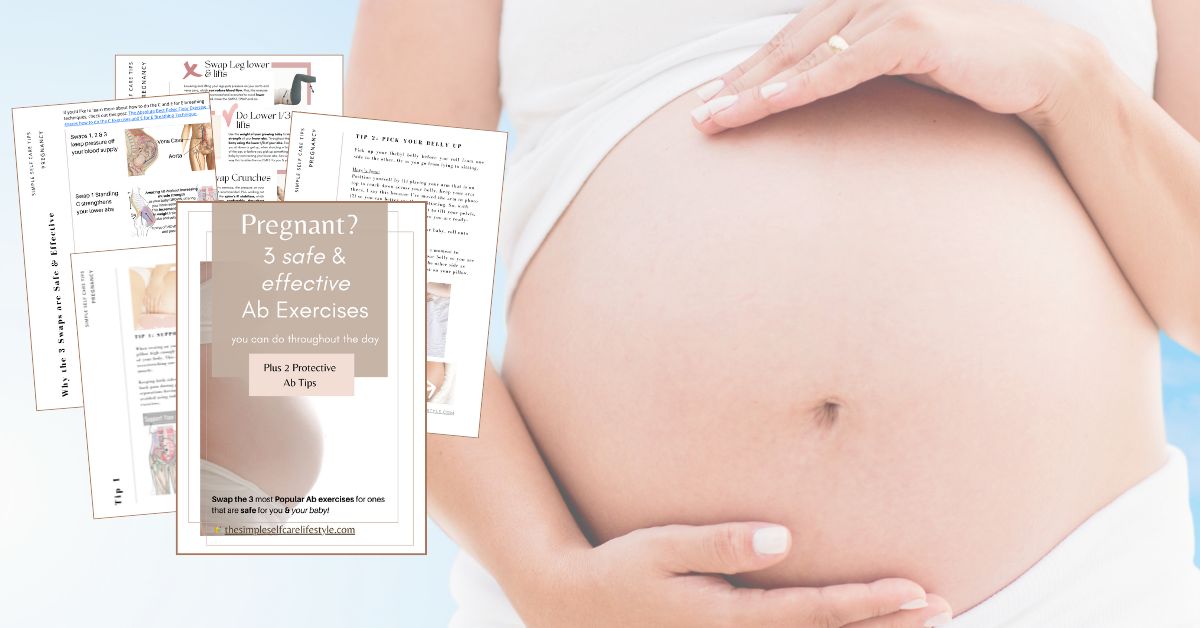
Free PDF: 3 Safe & Effective Ab Exercises PLUS 2 Protective Ab Tips

The Simple Self Care Lifestyle
Post category
Healthy Home
Simple Swaps for Your Home
Post category
Reduce Toxins
Swap out everyday products