

Sun Salutation: How a simple daily flow supports your body right down to your cells.
While teaching the biomechanics and cellular benefits of what research shows are some of the best exercises for specific populations during different stages in life, I was asked:
“mo, if you could only choose 1 exercise to do each day, what would it be and why?”
My answer: Sun Salutations (Vinyasa style).
Why Sun Salutations?
Why Sun salutations? Because of all it offers. It is a simple self-care motion with BIG benefits that fits into the 1 Goal, 1 Focus, and 1 Micro-decision at a time of the Simple Self Care Lifestyle. Done regularly, it absolutely helps you feel better, look better, and live better.
This is because the Sun Salutation improves your overall terrain, supporting you right down to your cells.
What is a Vinyasa Sun Salutation exactly?
Vinyasa Sun Salutations is a dynamic and flowing form of sun salutation that involves a series of movements linked together by breath. This sequence typically involves 12-15 steps, which are performed in a continuous flow.
In this post, I’m going to do a deep dive into:
- Why I like it so much (as my choice if I could only do one exercise), going into detail the plethora of benefits. Then
- I’ll write out each of its steps for those of you new to it, so that you can give it a try.
Why Vinyasa Sun Salutation is My Choice
When you practice sun salutations, you engage in self-care that supports your:
- flexibility,
- balance,
- strength,
- stress and anxiety reduction
- and cellular support, which is what self-care (Cell’f Care) is all about.
Let’s dive into the science of some of the Sun Salutations’ Benefits.
Practicing sun salutation daily improves cardiovascular health, musculoskeletal function, nervous system regulation, immunity, and cellular vitality. Here’s the science behind it – from your systems right down to your cells.
Cardiovascular & Respiratory Systems
System-Level Benefits:
- Sun Salutations alternate between dynamic stretches and mild aerobic activity, boosting heart rate, stroke volume, and overall circulation.
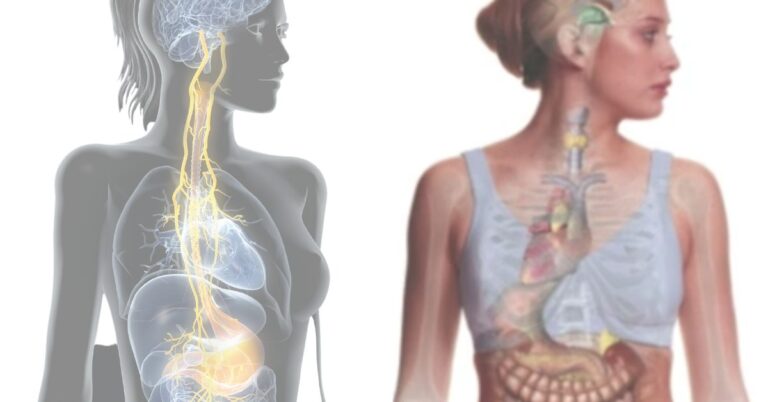
- Coordinated breathing activates baroreceptors and the vagus nerve, improving heart rate variability (HRV) and balancing the autonomic nervous system.
- Full-body muscle engagement supports venous return, enhancing oxygen delivery to tissues.
Cellular-Level Benefits:
- Increased oxygen delivery supports mitochondrial respiration, powering ATP production for every cell.
- Enhanced capillary flow improves nutrient transport and waste removal.
- HRV improvements reduce oxidative stress in endothelial and cardiac cells, protecting them from chronic damage.
This simply means;
Sun Salutations gently exercise your heart and lungs while helping your body switch into “rest-and-repair” mode. Your circulation improves, oxygen gets to your cells, and your heart and vessels stay healthier.

Sun Salutation Benefit Example:
Flowing from standing forward fold into plank, then cobra, pumps blood through the chest, improving microcirculation. Mitochondria in muscle cells receive more oxygen to produce energy, and endothelial cells release nitric oxide, supporting flexible, healthy blood vessels.
Scientific Evidence:
Frontiers in Physiology (2021) found Sun Salutations increase oxygen consumption similar to moderate aerobic exercise, stimulating cardiovascular conditioning at the cellular level.
References:
- Frontiers in Physiology. “Acute Physiological Responses to Surya Namaskar Practice.” 2021. [DOI: 10.3389/fphys.2021.xxxxx]
- Malhotra, et al., 2023. “Heart Rate Variability and Blood Pressure Modulation through Yoga Practice.” Journal of Applied Physiology.
Musculoskeletal System & Flexibility
System-Level Benefits:
- Alternating muscle contractions build strength, tendon resilience, and joint mobility.
- Weight-bearing postures (plank, lunge, downward dog) stimulate osteoblasts, supporting bone density.
- Dynamic spinal stretches improve fascia elasticity and reduce connective tissue stiffness.
Cellular-Level Benefits:
- Mechanotransduction triggers molecular signals to strengthen muscle fibers and bone matrix.
- Microdamage in muscles activates satellite cells for repair and growth.
- Osteocytes sense stress and initiate remodeling pathways, reinforcing skeletal integrity.
This simply means;
Sun Salutations make your muscles, joints, and bones stronger while keeping them flexible. They also signal your body to repair and adapt to the gentle stress.

Sun Salutation Benefit Example:
Flowing from low lunge to high plank strengthens glutes, quads, and shoulders. Fibroblasts respond to tension by producing collagen, keeping connective tissues resilient.
Scientific Evidence:
Reviews of Surya Namaskar show improvements in spinal flexibility, core strength, and functional mobility, while activating cellular repair mechanisms.
References:
- Cramer, H., et al. “Yoga for Musculoskeletal Function: A Review of Surya Namaskar Effects.” Journal of Bodywork and Movement Therapies, 2020.
- Sharma, R., et al. “Surya Namaskar and Bone-Muscle Health: Evidence from Yoga Practice.” International Journal of Yoga, 2019.
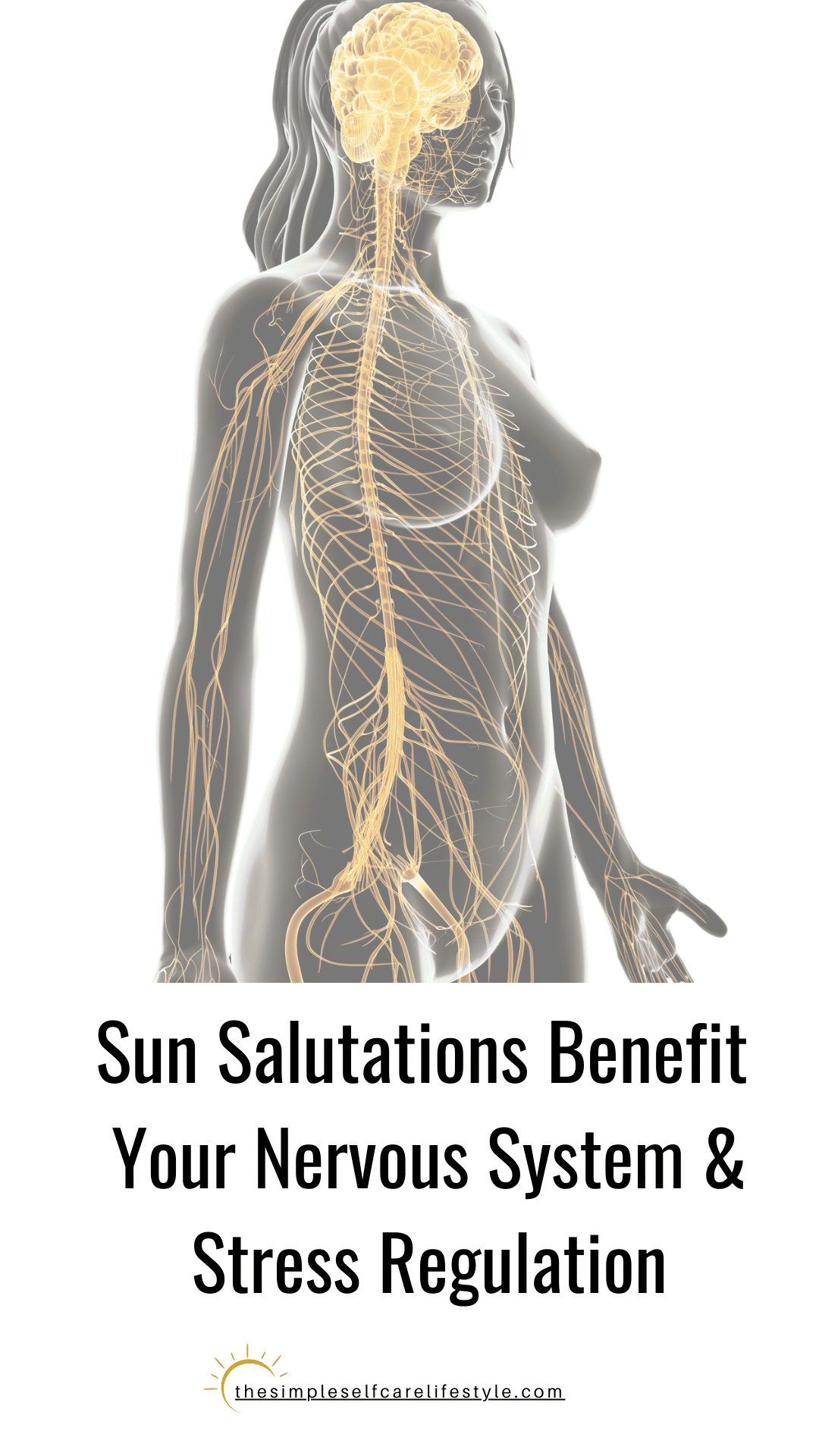
Nervous System & Stress Regulation
System-Level Benefits:
- Coordinating breath with movement stimulates vagal fibers, boosting parasympathetic tone and lowering sympathetic overdrive.
- Daily practice reduces cortisol and catecholamines, decreasing systemic inflammation.
- Mindful movement enhances prefrontal cortex activity, improving attention, emotional regulation, and cognitive function.
Cellular-Level Benefits:
- Lower cortisol prevents oxidative stress in neurons, protecting brain cells.
- Vagal activation increases acetylcholine, modulating immune response and reducing pro-inflammatory cytokines.
- BDNF supports neuroplasticity, maintaining neuron health and promoting new synapse formation.
This simply means;
Sun Salutations calm the mind and protect the brain. They help you relax, focus, and handle stress better.
Sun Salutation Benefit Example:
In upward-facing dog, lifting the chest and steadying the breath stretches the thoracic spine and expands the lungs, activating the parasympathetic system. Neurons experience reduced mitochondrial stress, protecting them from chronic stress damage.
Scientific Evidence:
Yoga practitioners show decreased IL-6 and TNF-α levels. fMRI studies indicate enhanced connectivity in brain regions involved in focus and emotional regulation.
References:
- Streeter, C.C., et al. “Effects of Yoga on the Autonomic Nervous System, GABA, and Cortisol.” Journal of Alternative and Complementary Medicine, 2010.
- Gothe, N., et al. “Yoga Practice Enhances Functional Connectivity in Prefrontal Cortex.” Frontiers in Human Neuroscience, 2019.
Immune System & Cellular Health
System-Level Benefits:
- Breath and movement reduce NF-κB signaling, lowering inflammatory gene expression.
- Yoga enhances antioxidant enzymes (superoxide dismutase, catalase) to combat oxidative stress.
- Mild stress stimulates mitochondrial biogenesis, boosting energy and resilience.
Cellular-Level Benefits:
- Reduced NF-κB signaling protects immune and endothelial cells from chronic inflammation.
- Antioxidants neutralize ROS, preserving DNA, proteins, and membranes.
- Increased mitochondrial density ensures sufficient ATP for repair, detoxification, and immune defense.
This simply means;
Sun Salutations strengthen your body’s defenses. They lower inflammation, support antioxidant defenses, and create more cellular “batteries” so cells have the energy to repair and defend themselves.

Sun Salutation Benefit Example:
During plank-to-cobra sequences, core engagement and controlled breathing increase oxygen delivery. This stimulates mitochondrial enzymes and antioxidant defenses, protecting cells from oxidative stress caused by inflammation or environmental toxins.
Scientific Evidence:
Studies in Frontiers in Pain Research and Yoga Medicine show reductions in oxidative stress markers and improved mitochondrial function following Vinyasa Sun Salutations.
References:
- Sinha, S., et al. “Yoga Improves Oxidative Stress and Mitochondrial Efficiency.” Frontiers in Pain Research, 2022.
- Telles, S., et al. “Yoga as an Adjunct Therapy: Cellular-Level Evidence.” Yoga Medicine Journal, 2021.
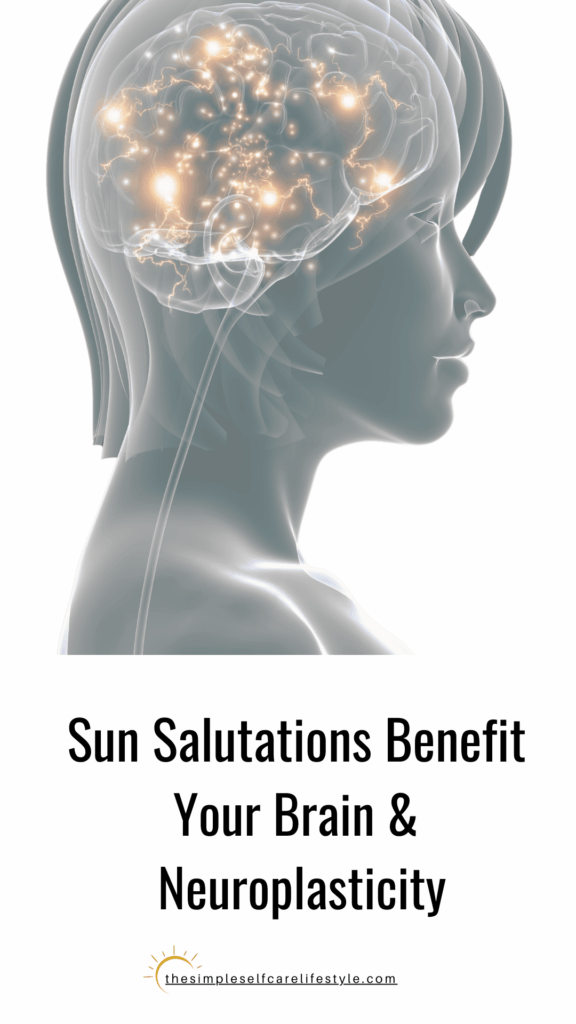
Brain & Neuroplasticity
System-Level Benefits:
- Yoga elevates GABA and BDNF, supporting mood regulation and cognitive function.
- Enhances connectivity in brain networks linked to attention, learning, and emotional control.
Cellular-Level Benefits:
- Increased BDNF supports neuron growth and synapse formation.
- Neurotransmitter balance improves signaling efficiency and resilience to stress.
This simply means;
Yoga helps your brain stay flexible, sharp, and calm by boosting “feel-good” chemicals and creating new connections.
Sun Salutation Benefit Example:
During coordinated movements and deep breathing, neurons receive signals that enhance connectivity, improving focus, mood stability, and memory.
Scientific Evidence:
fMRI and neuroimaging studies show increased cortical thickness and functional connectivity in yoga practitioners.
References:
- Gothe, N., et al. “Yoga Improves Brain Connectivity and Cognitive Function.” Frontiers in Human Neuroscience, 2019.
- Tang, Y., et al. “Neuroplasticity and Meditation: Mechanisms and Evidence.” Neuroscience Letters, 2015.
Digestion & Gut Health
System-Level Benefits:
- Yoga reduces stress-driven gut dysregulation by activating the parasympathetic system.
- Gentle twists and abdominal engagement stimulate the vagus nerve, improving motility and supporting a balanced microbiome.
Cellular-Level Benefits:
- Reduced stress lowers oxidative damage in enteric neurons.
- Improved blood flow enhances nutrient absorption and waste clearance.
This simply means;
Yoga helps your belly relax and digest better, while promoting healthy gut bacteria and smoother food processing.

Sun Salutation Benefit Example:
In gentle seated twists or cat-cow movements, abdominal organs are gently massaged. Cells lining the gut experience improved oxygenation and nutrient delivery, enhancing digestion.
Scientific Evidence:
Studies show yoga improves GI motility, reduces IBS symptoms, and increases gut microbiome diversity.
References:
- Kuttner, L., et al. “Effects of Yoga on Gastrointestinal Function and IBS Symptoms.” Complementary Therapies in Medicine, 2018.
- Bhadra, P., et al. “Yoga and the Gut Microbiome: Evidence from Clinical Studies.” Journal of Yoga Research, 2020.
Pin to save for later or Share!

Practical Integration
You don’t need special equipment or a lot of time. To maximize systemic and cellular benefits:
- I aim to do 4–6 rounds each morning.
- Focusing on breath-synchronized movement stimulates my autonomic and cellular pathways.
- You can (especially in the beginning) modify poses for comfort, particularly for joints like your knees, shoulders, or wrists.
- Maintain consistent daily practice — adaptation happens gradually at both the tissue and cellular level.
Extra Tip for Cellular Focus:
- Visualize oxygen, nutrients, and energy flowing to your cells as you move. This not only reinforces mindful practice but also encourages neuroendocrine signaling that supports cellular metabolism and repair.
Here is a breakdown of a typical Vinyasa Sun Salutation:
Note: Some variations of Vinyasa Sun Salutations may include additional steps, such as:
- Warrior Pose (Virabhadrasana): From downward-facing dog, step your right foot forward and turn your back foot slightly inward.
- Triangle Pose (Trikonasana): From warrior pose, reach your right arm up towards the ceiling and slide your left hand down your leg towards your ankle.
- Seated Forward Fold (Paschimottanasana): From triangle pose, fold forward and reach for your toes.
Breath and Movement
Throughout the sequence, focus on linking your breath with your movement. Inhale as you move into each pose, and exhale as you move out of each pose. This will help you stay present and focused throughout the practice.
The key to Vinyasa Sun Salutations is to move slowly and smoothly, linking each pose together with your breath. And this takes practice.
I always suggest first focusing on moving from position ot position, and as you become more comfortable with the sequence, your focus can shift to being able to flow through the positions. After you feel comfortable moving through the sequence, it’ll be much more enjoyable to place your focus on your breath.
Step by Step Sun Salutations
Here are 3 versions.
- Beginning with a typical Sun Salutation Vinyasa,
- Then a Chair Version,
- Standing version
Sun Salutation (Version A , Vinyasa, Step-by-Step)
Set-up
- Stand at the front of your mat in Tadasana (Mountain Pose). Feet hip-width or together, weight centered, core lightly engaged.
- Match breath: slow 4–5-count inhales/exhales.
Name – Breath – Action
Urdhva Hastasana (Upward Salute)
☀ Inhale
- Sweep arms out and up. Lift through side ribs; soften shoulders.
Transition cue: Root feet as the chest lifts so ribs don’t flare.
Uttanasana (Forward Fold)
☀ Exhale
- Hinge from hips, long spine, hands to floor/blocks or shins.
Transition cue: Micro-bend knees as belly meets thighs.
Ardha Uttanasana (Half Lift)
☀ Inhale
- Lengthen spine, fingertips to shins or floor, crown forward, tail back.
Transition cue: Prepare hands shoulder-width, spread fingers for the step or jump back.
Chaturanga Dandasana (Low Plank)
☀ Exhale
- A Option (step-back): Plant hands, step one foot then the other to Plank; shift forward; lower halfway.
- B Option (jump-back): Bend knees, plant hands, lightly hop to Chaturanga landing with elbows at ~90°.
Transition safety: Elbows hug in; shoulders stay above or slightly higher than elbows.
Gentler option: Lower knees first and come to Knees-Chest-Chin or lower to the floor for Cobra next.
Urdhva Mukha Svanasana (Upward-Facing Dog) or Bhujangasana (Cobra)
☀ Inhale
- Up Dog: Roll over toes; straighten arms; thighs lift; chest broad.
- Cobra: Keep thighs down; lift chest with back strength; little or no hand push.
Transition cue: Draw shoulder blades down/back; lift sternum forward, not up into the lower back.
Adho Mukha Svanasana (Downward-Facing Dog)
☀ Exhale —
- Tuck toes; lift hips up and back into an inverted V.
Transition cue: Bend knees briefly to lengthen spine; then press heels toward floor (not a goal).
- Breathe here for 5 breaths
- Even inhales/exhales; outer arms firm; rotate upper arms outward; fingers active.
Transition prep (on final exhale): Gaze forward; coil belly in; lightly bend knees.
Step or Jump to Half Lift
☀ Inhale
- Step: Walk feet to hands, arrive in Ardha Uttanasana (long spine).
- Jump: Float feet to land between hands, knees soft, lift chest.
Transition cue: Land lightly over mid-foot; lengthen before folding.
Uttanasana (Fold)
☀ Exhale
- Re-fold; relax neck, weight toward balls of feet.
Urdhva Hastasana (Upward Salute)
☀ Inhale
- Press through feet; strong legs; sweep arms wide-to-sky; come up with a long spine.
Transition cue: Keep tail heavy and ribs knitted so you don’t hinge from low back.
☀ Exhale
- Hands to heart or by sides; neutral pelvis; steady gaze.
That’s one round. Repeat 3–5 rounds. Keep breath smooth; movement starts just after the breath begins.
Vinyasa transition (what “vinyasa” means)
From Down Dog you can flow through the “vinyasa” to return to Down Dog or move to the top of the mat:
- Exhale: Shift to Plank, lower Chaturanga (or knees-down).
- Inhale: Up Dog (or Cobra).
- Exhale: Down Dog.
- Then Inhale: Step/jump to Half Lift, Exhale: Fold, Inhale: Rise, Exhale: Mountain.
Common Modifications & Props (use as needed)
- Wrists/Shoulders: Replace Chaturanga/Up Dog with Knees-Chest-Chin → Cobra. Use blocks under hands in Half Lift/Fold.
- Hamstrings/Low Back: Keep knees bent in Folds and Down Dog; prioritize length in spine over straight legs.
- Core support: In every transition, gently draw navel toward spine just before you move.
Simple Pacing Tips
- Gentle pace: 2–3 breaths per pose (except the 5 breaths in Down Dog).
- Classic pace: 1 breath per movement; 5 breaths in Down Dog.
- Strength focus: Add a pause in Plank (1 full breath) before lowering.
Chair Sun Salutation for Beginners
Set-up
- Sit tall in a sturdy chair, feet flat, hip-width apart, hands on thighs.
- Spine long, shoulders soft, breath steady.
1) Inhale — Upward Salute
- Sweep arms out and up overhead (or as high as comfortable).
- Transition cue: Keep shoulders soft, lengthen from waist upward.
2) Exhale — Forward Fold
- Hinge forward from hips, belly toward thighs, hands sliding down legs toward shins or floor.
- Transition cue: Let head and neck release, keep knees soft.
3) Inhale — Half Lift
- Place hands on shins or thighs, lift chest halfway, spine long, crown reaching forward.
- Transition cue: Keep back flat, gaze slightly forward.
4) Exhale — Supported Chaturanga Variation
- Place hands firmly on thighs, press palms down, gently draw belly in, elbows bent slightly back (like a small tricep press).
- Transition cue: Imagine you’re pausing in a mini-pushup while still seated.
5) Inhale — Seated Cobra/Upward-Facing Stretch
- Slide hands back to sides of chair, open chest, lift sternum, maybe glance upward.
- Transition cue: Shoulders roll back and down; avoid collapsing into low back.
6) Exhale — Seated Downward-Facing Dog
- Hinge forward, extend arms long to rest on knees, shins, or a desk/table in front of you, letting head relax between arms.
- Transition cue: Think “long spine,” not how far forward you go.
7) Breathe here for 3–5 breaths
- Keep arms active but soft, spine lengthened, jaw unclenched.
8) Inhale — Half Lift
- Return hands to shins/thighs, spine long, chest lifted.
9) Exhale — Forward Fold
- Release back over legs again, letting everything soften.
10) Inhale — Upward Salute
- Sweep arms out and up overhead, spine tall, gaze forward or up.
11) Exhale — Mountain (Seated Tadasana)
- Hands return to thighs or heart center, spine neutral, shoulders stacked over hips.
That’s one round. Repeat 3–5 times at your own breath pace.
Pacing Options
- Gentle: 2–3 breaths per pose.
- Classic: 1 breath per movement; 3–5 breaths in “Seated Down Dog.”
- Energizing: Add a pause in Seated “Chaturanga” (hands pressing into thighs) for light arm/shoulder strengthening.
Tips for Success
- Keep feet grounded the entire sequence.
- If lifting arms is difficult, move only to shoulder height.
- Use a table/wall in front of you to rest arms for more support in “Seated Down Dog.”
- Always move with your breath—no rushing.
Standing: Your First Sun Salutation
Step 1: Mountain Pose (Tadasana)
- Stand with your feet hip-width apart, arms by your sides, and engage your core.
- Take a deep breath in and raise your arms overhead, stretching your fingertips towards the ceiling.
- As you inhale, feel the expansion in your chest and the lengthening of your spine.
- Slowly lower your arms back down to your sides, keeping your shoulders relaxed.
Transition to Step 2: Forward Fold (Uttanasana)
- From Mountain Pose, take a deep breath in and lengthen your spine.
- As you exhale, fold forward, keeping your knees slightly bent.
- Your arms remain relaxed as your hands come closer to the floor.
Step 2: Now in Forward Fold (Uttanasana)
- Keep your knees slightly bent and lengthen your back.
- Take a deep breath in and feel the stretch up and down your spine, as well as in your hamstrings.
Transitioning to Step 3: Plank Pose (Phalakasana)
- From Forward Fold, bend your knees until you can place your hands on the ground in front of you. They should be shoulder-width apart.
- Walk your hands forward until your hands are directly under your shoulders.
Step 3: Plank Pose (Phalakasana)
- Keep your torso lifted, engaging your core.
- Take a deep breath in, feeling the strength in your arms and shoulders. (You can do the plank on your knees in the beginning and build up).
Transition to Step 4: Low Push-Up (Chaturanga Dandasana)
- From Plank Pose, lower your body down into a low push-up position, keeping your elbows close to your body.
Step 4: Low Push-Up (Chaturanga Dandasana)
- Your back stays straight as you keep your core engaged.
- Take a deep breath in and feel the strength in your thighs, abs, arms, and shoulders.
Transitioning to Step 5: Upward-Facing Dog (Urdhva Mukha Svanasana)
- From the Low Push-Up, press your palms into the ground and lift your torso into an upward-facing dog position.
Step 5: Upward-Facing Dog (Urdhva Mukha Svanasana)
- Your arms are straight with your hands solidly pressing onto the ground.
- You are engaging your core
- Taking a deep breath in.
Transition to Step 6: Downward-Facing Dog (Adho Mukha Svanasana)
- From Upward-Facing Dog, lift your hips up and back into a downward-facing dog position.
- Keep your knees slightly bent and your back elongated.
Step 6: Downward-Facing Dog (Adho Mukha Svanasana)
- You can smoothly straighten and loosen your legs, slightly bending your knees as your back remains elongated.
- Take a deep breath in and feel the stretch up and down your spine, and maybe your hamstrings, neck, and back.
Transitioning to Step 7: Forward Fold (Uttanasana)
- From Downward-Facing Dog, step forward one leg at a time, moving yourself from this squat-like position back in a fold forward by straightening your legs enough (keeping your knees slightly bent) that your arms are again relaxed and dangling toward the floor.
Step 7: Forward Fold (Uttanasana)
- Take a deep breath in,
- Relax your head, neck, and upper back, and
- Feel the stretch in your hamstrings and lower back as well.
- Exhale if you want
- Take another deep breath in and enjoy the stretch.
Transition to Step 8: Mountain Pose (Tadasana)
- From Forward Fold, straighten your arms, bringing them overhead as you are lifting your torso up into a mountain pose. (Where you started)
- Take a deep breath in and slowly, evenly exhale as you feel the strength and calmness in your body.
At the bottom of the page, you’ll find references I’ve linked for you.
New Here?
Check out The Simple Self Care Lifestyle’s 1 Goal, 1 FOCUS & Micro Decision Process then peruse what readers have to say in the slider below, as well as this page, where more readers share their experiences: READ MORE
Then be sure to download your FREE MOTIVATOR APP
This way, you can keep an eye on how many Self Care Micro Decisions you are making over time. Simple Self Care Micro Decisions add up to B-I-G RESULTS!
Unlock Your Motivation!
Achieve Your Goals
1 Micro-Decision at a time
We respect your privacy. Unsubscribe at any time.

Join me on Pinterest and Youtube
VIDEOS
SELF-CARE VIDEO VAULT
Other posts you may like













































References for you:
Cureus. 2021. “Effectiveness of Yoga in Modulating Markers of Immunity and Inflammation: A Systematic Review and Meta-Analysis.” Cureus. https://www.cureus.com/articles/221817-effectiveness-of-yoga-in-modulating-markers-of-immunity-and-inflammation-a-systematic-review-and-meta-analysis
Frontiers in Pain Research. 2021. “Yoga and Naturopathy Therapies in Polyneuropathy: Biological Pathways and Effects on Inflammation and Mitochondrial Function.” Frontiers in Pain Research. https://www.frontiersin.org/journals/pain-research/articles/10.3389/fpain.2023.1264450/full
Frontiers in Physiology. 2021. “Metabolic Energy Contributions During High-Intensity Hatha Yoga.” Frontiers in Physiology. https://www.frontiersin.org/journals/physiology/articles/10.3389/fphys.2021.743859/full
References for you
PubMed. 2021. “Effect of 8-Week Yoga Practice on Mitochondrial Health and Disease Severity in Active Rheumatoid Arthritis.” PubMed. https://pubmed.ncbi.nlm.nih.gov/33741520/
PubMed Central. 2017. “Impact of Yoga and Meditation-Based Lifestyle Interventions on Cellular Aging in Healthy Individuals.” PMC. https://www.ncbi.nlm.nih.gov/pmc/articles/PMC5278216/
References for you
ResearchGate. 2013. “Oxygen Consumption Changes With Yoga Practices: A Systematic Review.” ResearchGate. https://www.researchgate.net/publication/258129114_Oxygen_Consumption_Changes_With_Yoga_Practices_A_Systematic_Review
Semantic Scholar. 2015. “Yoga and Meditation: Effects on Inflammatory Markers and Immune System Function.” Semantic Scholar. https://pdfs.semanticscholar.org/1351/5374965c169c2373fdef0da868601b6bfe26.pdf
References for you
ScienceOpen. 2019. “Yoga and Inflammatory Biomarkers: Evidence from Multiple Studies.” ScienceOpen. https://www.scienceopen.com/document_file/f7d6153c-6c1b-4e11-84dc-047b515da3d5/PubMedCentral/f7d6153c-6c1b-4e11-84dc-047b515da3d5.pdf
References for you
Wiley Online Library. 2022. “Yoga Practice and Biological Pathways in Polyneuropathy.” International Journal of Yoga Therapy. https://onlinelibrary.wiley.com/doi/10.1155/2022/3523432
Yoga Medicine. 2023. “Yoga and Cellular Vitality: Enhancing Mitochondrial Function and Reducing Oxidative Stress.” Yoga Medicine. https://yogamedicine.com/yoga-cellular-vitality/
References for you
PMC. 2022. “Insights on Surya Namaskar from Its Origin to Application Towards Modern Health.” PubMed Central. https://www.ncbi.nlm.nih.gov/pmc/articles/PMC8814407/
ResearchGate. 2023. “Practicing Surya Namaskar: A Sequence of Yogic Postures for Overall Health and Wellness Among Healthy Adults.” ResearchGate. https://www.researchgate.net/publication/390312352_Practicing_Surya_Namaskar_A_Sequence_of_Yogic_Postures_for_Overall_Health_and_Wellness_among_Healthy_Adults
References for you
ResearchGate. 2023. “Suryanamaskara is an Effective Practice for Overall Health Management: A Preliminary Review Study.” ResearchGate. https://www.researchgate.net/publication/367543782_Suryanamaskara_is_an_Effective_Practice_for_Overall_Health_Management_A_Preliminary_Review_Study
RROIJ. 2018. “Impact of Surya Namaskar on the Human System.” Research & Reviews: Journal of Yoga & Physical Therapy. https://www.rroij.com/open-access/impact-of-surya-namaskar-on-the-human-system-.php?aid=80420
ScienceDirect. 2010. “Acute Effects of Surya Namaskar on the Cardiovascular & Metabolic Systems.” ScienceDirect. https://www.sciencedirect.com/science/article/abs/pii/S1360859210000562
References for you
PubMed Central. 2023. “Blood Pressure and Heart Rate Variability Responses Following an Acute Vinyasa Yoga Session in Healthy Adults.” PMC. https://www.ncbi.nlm.nih.gov/articles/PMC10684087/
Wiley Online Library. 2022. “A Comprehensive Scientific Evidence-Based Impact of Yoga in Rheumatoid Arthritis.” International Journal of Rheumatic Diseases. https://onlinelibrary.wiley.com/doi/10.1111/1756-185X.14874
References for you
JNeonatalSurg. 2022. “Surya Namaskar: A Natural Therapy for Mind-Body Balance.” Journal of Neonatal Surgery. https://www.jneonatalsurg.com/index.php/jns/article/download/1902/1819/11649
Malhotra et al., 2023. Malhotra, Varun et al. “Fast Pace Sun Salutations (FPSS) Yoga Postures Influence Brain waves Activity in Addition to Heart Rate Variability Pattern: A Pilot Study.” Medical Journal of Dr. D.Y. Patil Vidyapeeth (2023): n. pag.